Published December 3, 2025 11:00AM
If you buy through our links, we may earn an affiliate commission. This supports our mission to get more people active and outside.Learn about Outside Online's affiliate link policy
11 Things You Didn’t Know About ASICS Running Shoes
From octopus-inspired soles to GEL cushioning, ASICS’s story has been fueled by innovation and commitment to continuous improvement
Few brands in running have a legacy as rich or as influential as ASICS. Born in post-World War II Japan with a mission to rebuild the nation’s spirit through sport, ASICS began by making basketball shoes before becoming a leader in performance running. Guided by the belief that movement nurtures both mind and body, and by the Japanese principle of kaizen—or continuous improvement—the brand’s innovations have defined what running shoes can be. Here are eleven things you need to know about ASICS running shoes.
1. ASICS was founded in 1949 in Kobe, Japan
After returning home from World War II, Kihachiro Onitsuka wanted to rebuild Japan’s morale through sport. Believing that physical activity could help restore the nation’s spirit, he founded the Onitsuka Company in Kobe, Japan, in 1949. Recognizing basketball’s growing popularity among Japanese youth, Onitsuka first began by producing basketball shoes
By the 1950s, the company expanded into running shoes and gained global recognition after Japanese marathoners won international races wearing Onitsuka footwear. In 1977, the Onitsuka Company merged with two other Japanese sporting goods firms, GTO and JELENK, to form ASICS Corporation.
ADVERTISEMENT
2. ASICS is an acronym for “Anima Sana In Corpore Sano”
“Anima Sana In Corpore Sano” is a Latin phrase meaning “A Sound Mind in a Sound Body.” When Kihachiro Onitsuka founded his company in 1949, he adopted this philosophy as the guiding principle. He believed that mental and physical health are interconnected and that exercise and movement are essential to both.
ADVERTISEMENT
This belief shaped the company’s direction from the very beginning and still remains an essential part of the brand to this day. Onitsuka designed shoes not only for performance but also to inspire personal growth, discipline, and joy through movement. As the brand evolved into ASICS Corporation in 1977, the Latin phrase was immortalized in its name, A.S.I.C.S.
3. A dish of octopus salad inspired ASICS’ first shoe
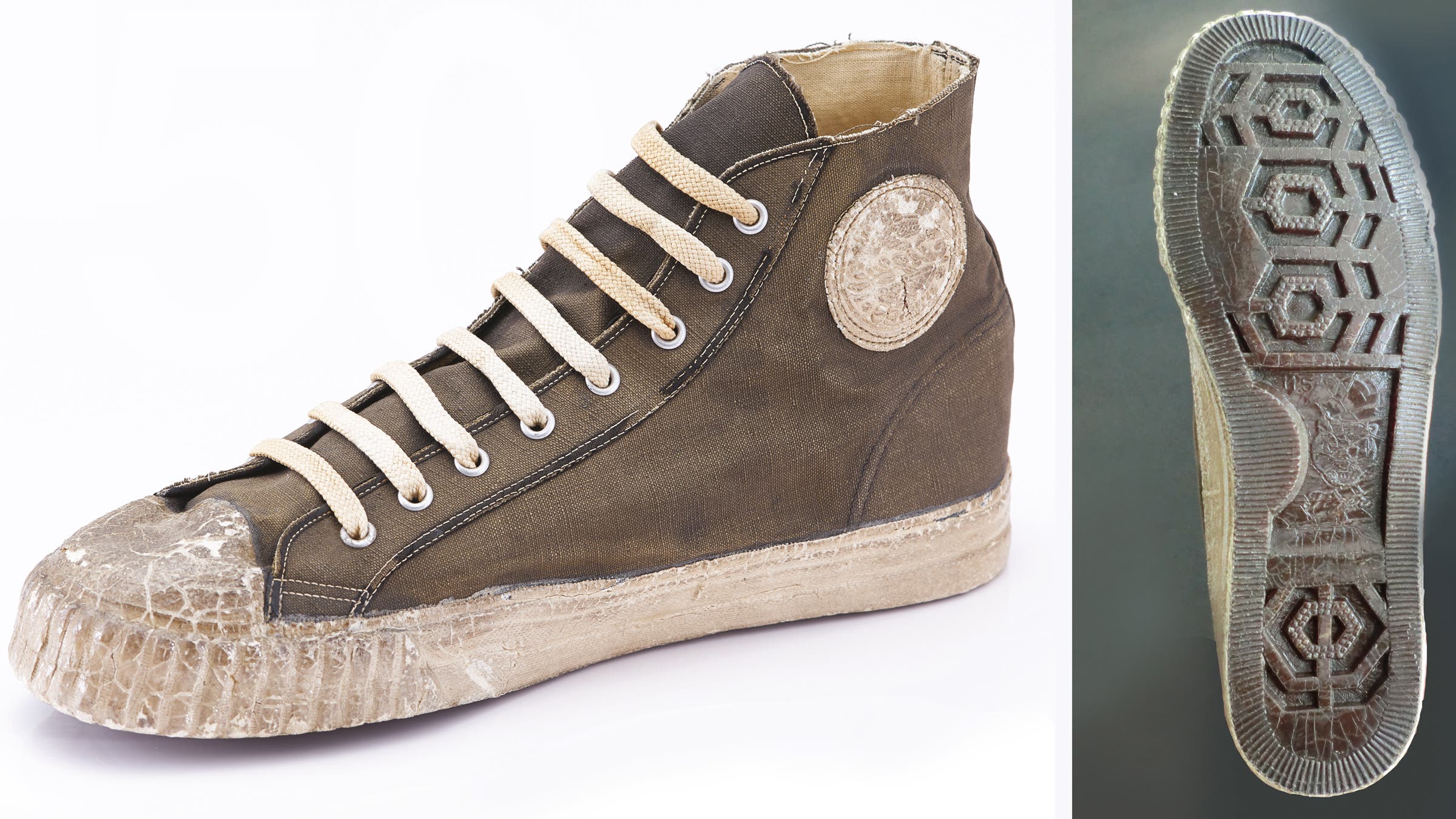
ASICS’ first shoe, the Onitsuka Tiger, was a basketball shoe—considered the hardest shoes to make at that time. The sport’s quick starts, stops, and lateral pivots demanded a level of traction and stability that few shoes at the time could provide.
Over dinner one night, Onitsuka had an epiphany at the sight of vinegared octopus: might he be able to improve traction by deepening the dimples across the entire sole to resemble octopus suction cups. The design proved remarkably effective, allowing players to change speed and direction more efficiently. The Onitsuka Tiger became ASICS’ first major innovation and would set up the brand for success.
ADVERTISEMENT
4. ASICS’ first running shoe was a split-toe shoe designed for marathons
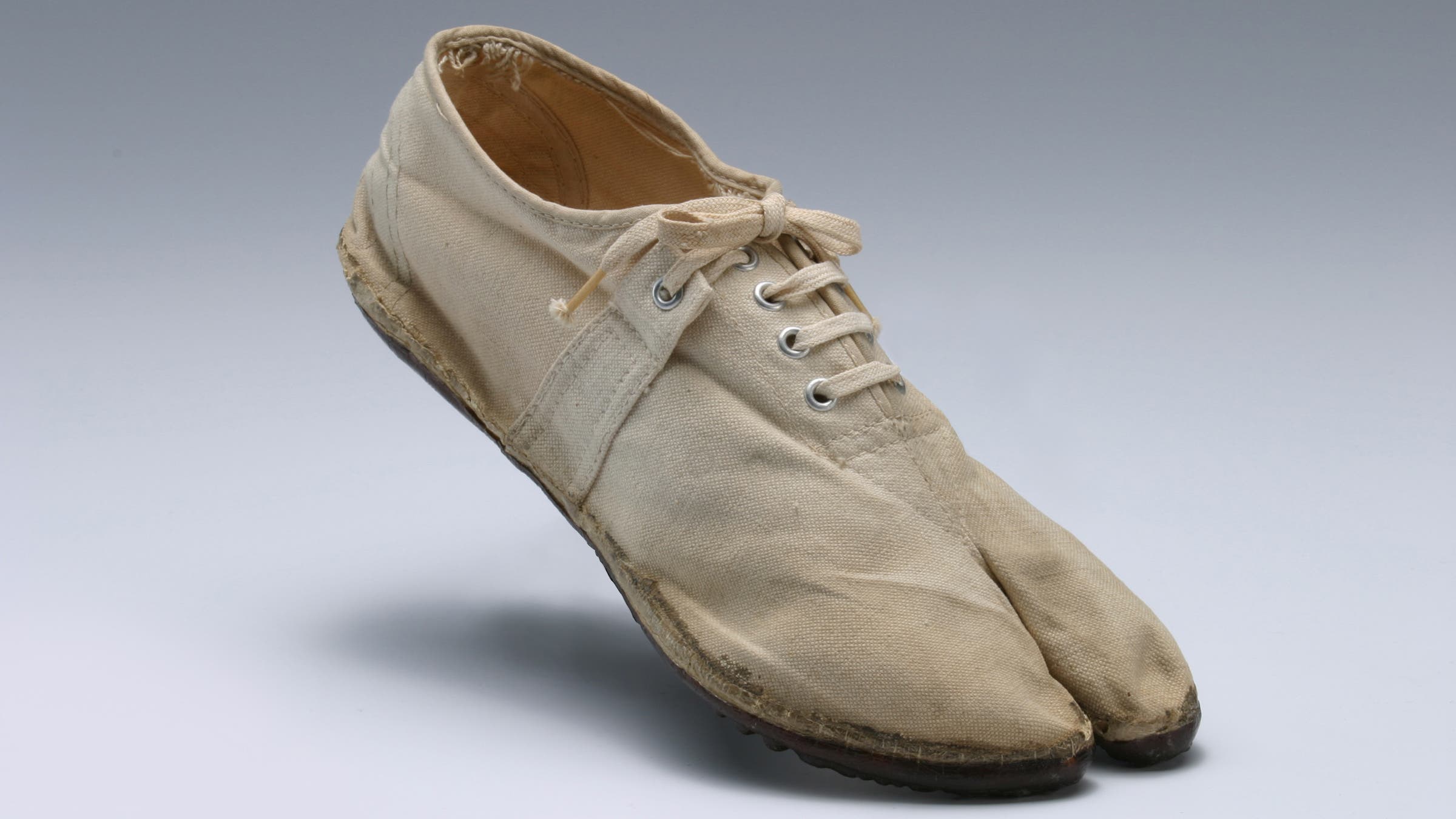
In 1953, the Onitsuka Company released Marathon TABI. It was among the first running shoes specifically designed for marathon runners. The shoe drew directly from the “tabi,” a type of split-toe sock or shoe traditionally worn by Japanese workers and athletes. The split-toe design (separating the big toe from the others) was believed to enhance balance, ground feel, and toe grip.
5. Nike’s founders, Phil Knight and Bill Bowerman, introduced ASICS to the United States.
Phil Knight, while attending graduate school at Stanford, wrote a paper proposing that Japanese manufacturers could rival Germany’s dominance (led by Adidas and Puma) by producing performance shoes at lower cost but equal quality. Knight took that one step further by traveling to Japan to meet with Onitsuka Company. He proposed that Knight’s and Bowerman’s Blue Ribbon Sports become the exclusive U.S. importer and distributor of Onitsuka Tiger shoes. With their help, the Onitsuka Tiger Cortez (later renamed the Corsair) became one of the most popular running shoes of the early 1970s.
ADVERTISEMENT
6. The crisscrossing stripes on ASICS shoes weren’t meant to be a trademark
Before 1970, running shoes had canvas uppers that offered little structure or support. To solve this problem, Kihachiro Onitsuka and his design team created a leather reinforcement overlay on both sides of the shoe. The interlaced, criss-crossed design wrapped around the upper to lock the foot in place, providing a better fit and lateral stability. One of the first shoes to incorporate this design was the Onitsuka Mexico 66, worn by athletes at the 1966 Mexico City Olympics.
ADVERTISEMENT
Nicknamed the “Tiger Stripes,” this design soon became Onitsuka’s—and later ASICS’—trademark. It symbolized the brand’s purpose-driven philosophy, where every visual element began as a functional innovation rooted in athletic performance. The stripes not only enhanced stability but also embodied ASICS’s belief that every aesthetic detail must first serve an athletic function.
7. ASICS Gel technology was introduced in 1986 and is still used today
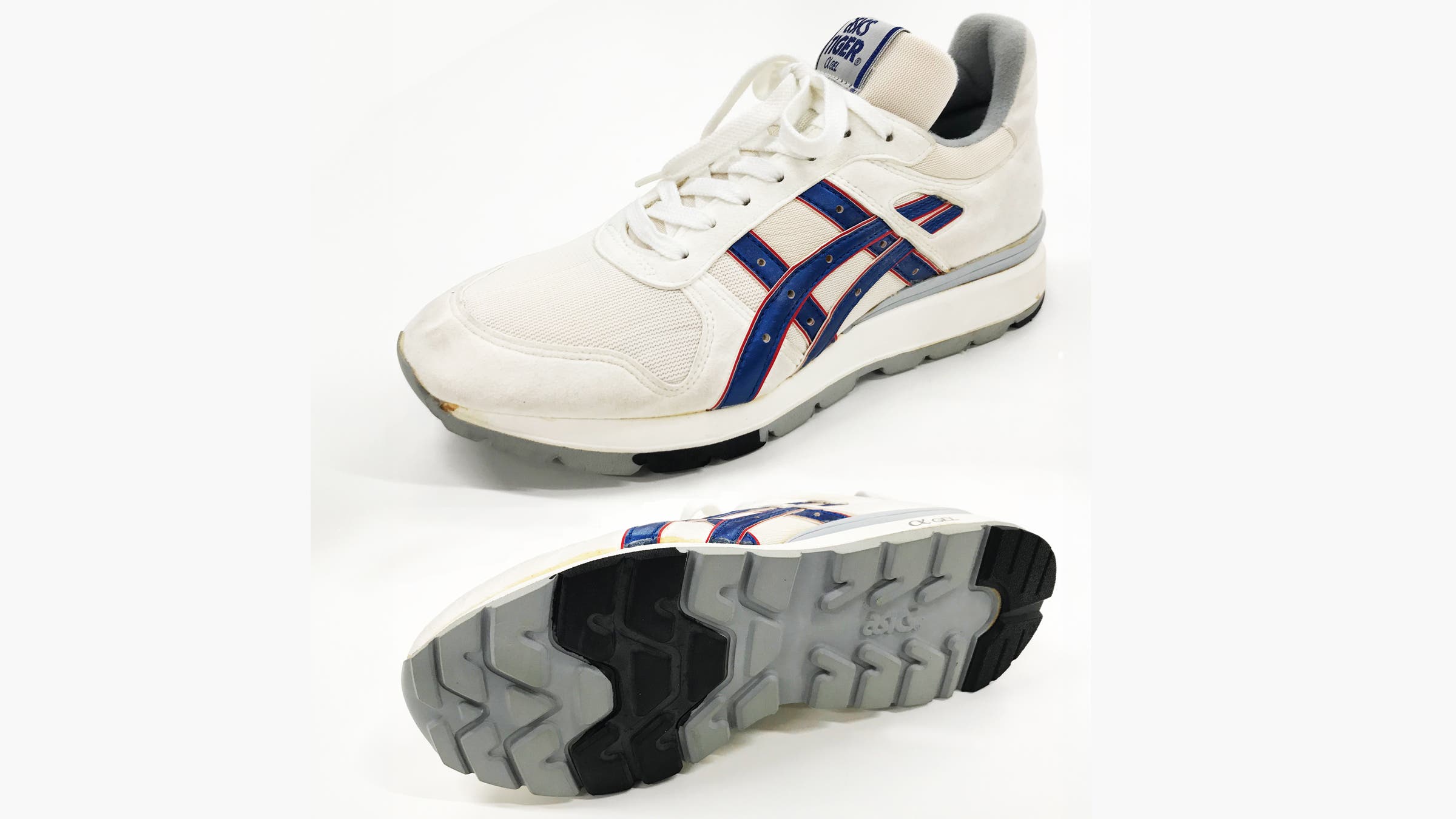
In an effort to create a better shock absorption system for runners, ASICS developed GEL Technology. Inspired by medical-grade silicone gel used in prosthetics, this viscoelastic gel compound is embedded in the heel and forefoot of the midsole. The 1986 GT-II was the first running shoe to incorporate GEL Technology. Originally visible in the midsole, ASICS gel achieved cult status in fashion and sneaker culture throughout the late 80s and 90s. While not visible today, it remains a hallmark feature of ASICS running shoes.
8. ASICS was one of the first brands to build an in-house sports science laboratory
In 1977, ASICS headquarters in Osaka, Japan, created the Technology Research Section to study apparel products, which was later expanded to include footwear. Then, in 1990, ASICS built the dedicated ASICS Institute of Sport Science (ISS) research facility. Here biomechanists, physiologists, kinesiologists, and materials engineers use advanced tools such as motion capture, pressure mapping, and gait analysis to research and optimize product design.
ADVERTISEMENT
9. ASICS pioneered the three-layer sole design (outsole, midsole, insole) used in every running shoe today.
Running shoes in the 1950s and 1960s were typically made with a single flat rubber sole stitched or glued directly to a thin upper, offering minimal cushioning or stability. These early designs were lightweight and flexible but lacked shock absorption and foot protection.
ADVERTISEMENT
Using gait analysis and a force plate, ASICS engineers discovered each footstrike produced up to three times the runner’s body weight in impact forces. To help dampen this impact, ASICS developed a layered sole system that featured a grippy rubber outsole, a foam midsole for cushioning and energy return, and an insole that adds breathability and comfort. This modular approach allowed shoe engineers to experiment with different densities and materials in each layer.
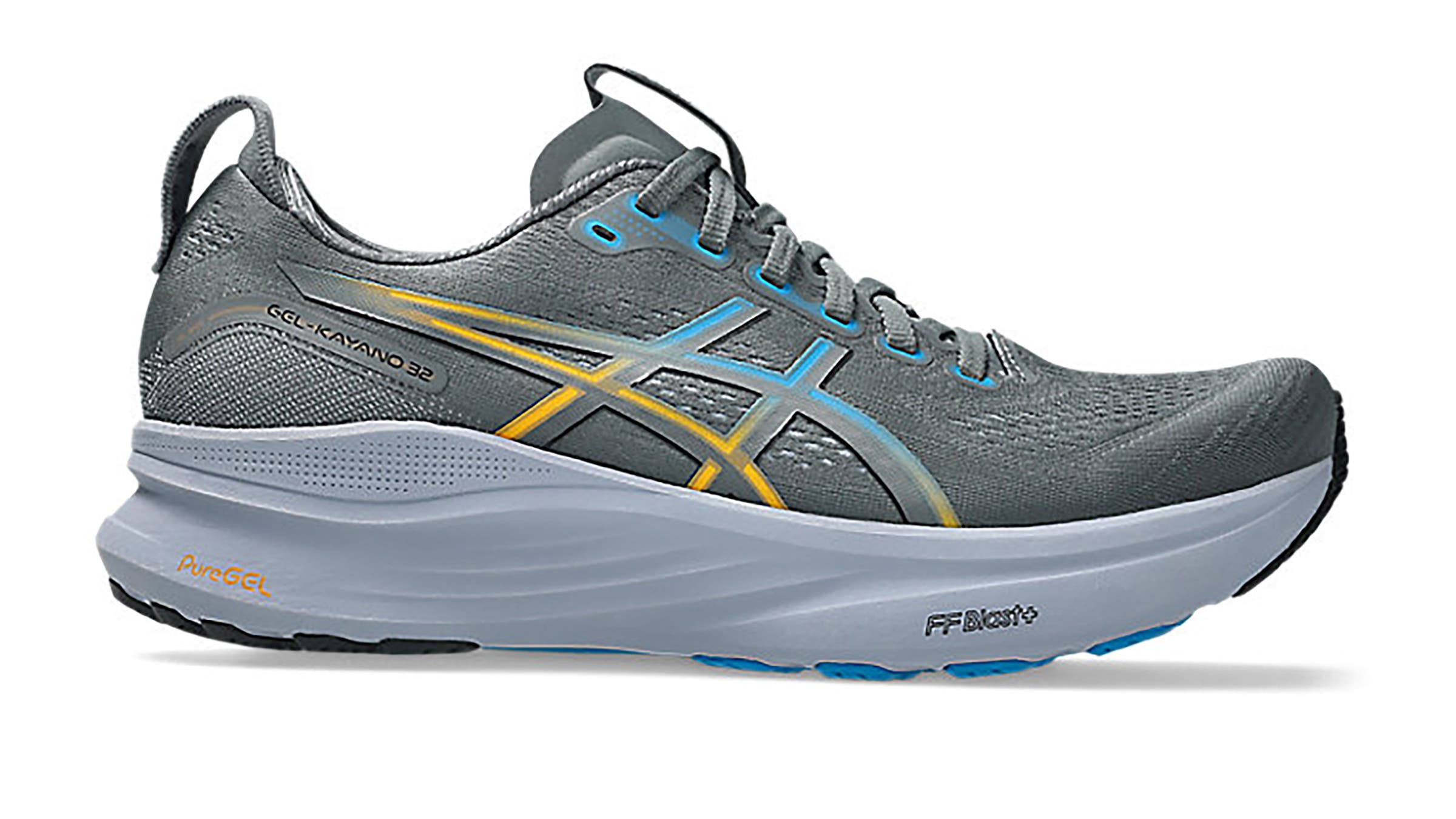
10. For more than 30 years, the ASICS Gel-Kayano has been a leader in stability footwear
In 1993, ASICS released the first Gel-Kayano, a running shoe that combined stability features with plush cushioning to help overpronating runners cover long distances in comfort. The shoe is named after its designer, Toshikazu Kayano. It was the first stability shoe to incorporate ASICS Gel-Technology, and has, over the years, featured some of ASICS’ best innovations. In 2023, the Gel Kayano challenged the traditional medial post for stability, creating a softer, adaptive stability design that adjusts to the runner’s stride for a more cushioned, less controlling ride.
Asics Gel-Kayano 32
11. ASICS created the world’s lightest marathon shoe in 1985, and then again in 2025.
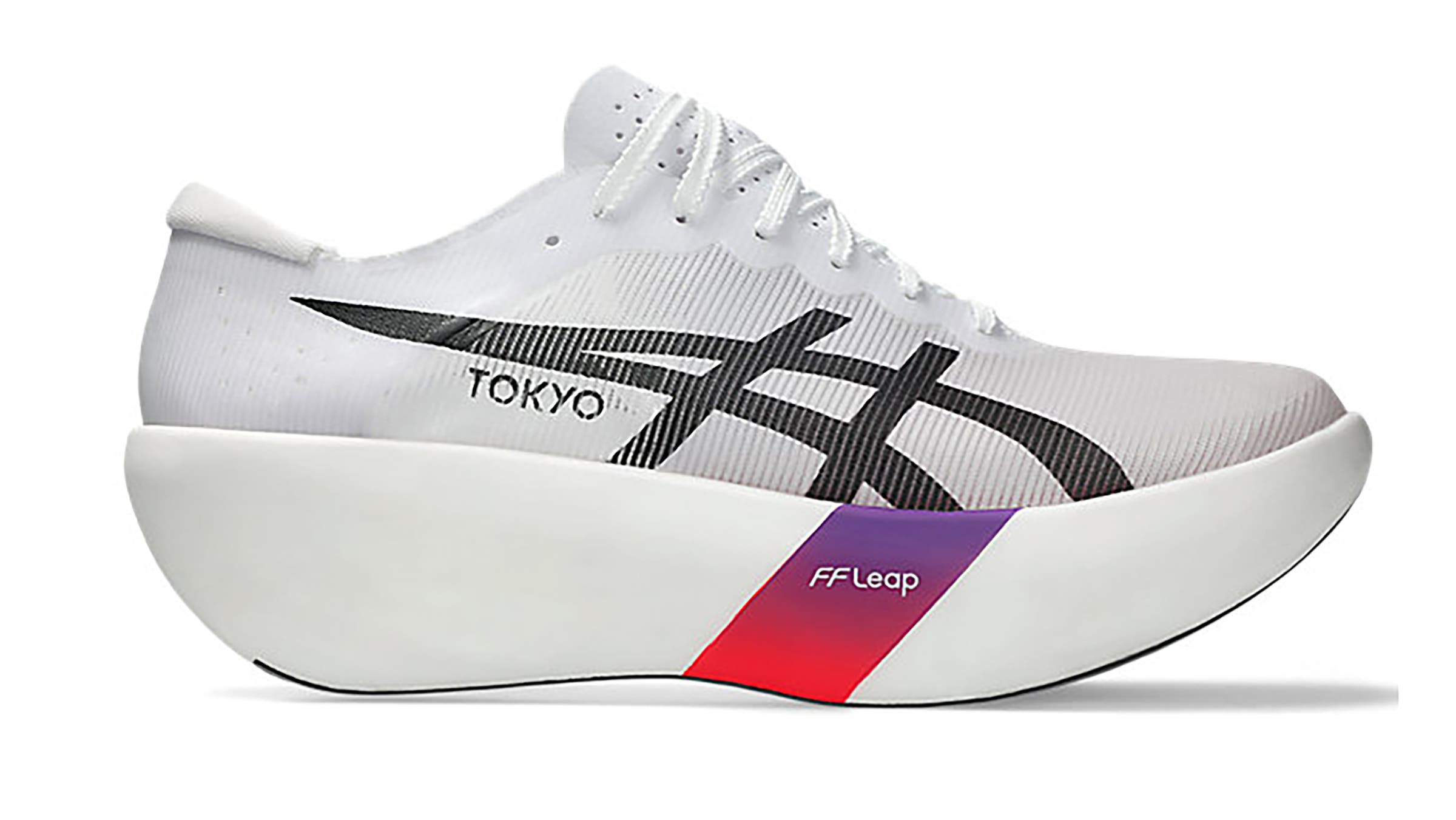
In 1985, ASICS introduced the Gel Marup racing flat, which, at 3.5 ounces, was the lightest running shoe at the time. Forty years later, in 2025, the brand created the world’s lightest super shoe racer, the Metaspeed Ray, weighing just 4.5 ounces and featuring a cutting-edge super foam called A-TPU. The Ray, along with two other ASICS marathon racers designed for different stride types, has solidified the brand as one of the leaders in the super shoe arms race.
Asics Metaspeed Ray