Published March 5, 2026 09:06AM
The National Park Service Just Issued a Quicksand Warning for Utah and Arizona
In addition to quicksand, officials report that harmful algal blooms have also been found in multiple waterways at concentrations at the high end of safe exposure levels.
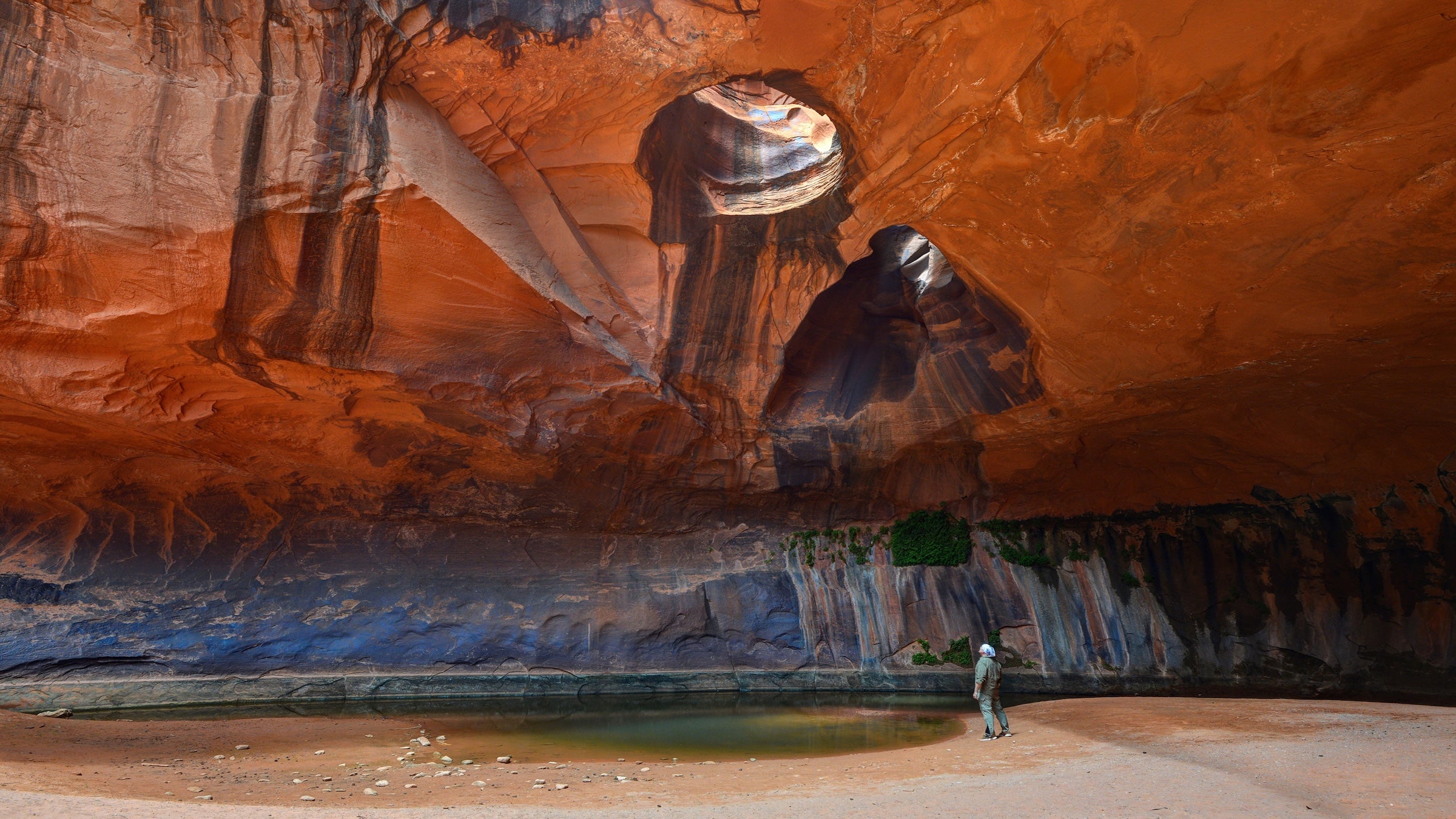
The Golden Cathedral in the Utah section of Glen Canyon National Recreation Area (Photo: Sierralara/Getty Images)
The National Park Service (NPS) is warning visitors to the Arizona and Utah deserts of two sneaky dangers. Both quicksand and harmful algal blooms have been reported in parts of Glen Canyon National Recreation Area.
Stretching for hundreds of miles between northern Arizona and southern Utah, Glen Canyon is a popular desert destination that provides access to both the Grand Canyon and Lake Powell. Quicksand can occur at any time in these desert environments when water interacts with sand, silt, or clay. Although quicksand is rarely deep enough to suck people under like it does in movies, trying to escape can be tiring—and knowing what to look for could keep a scary situation from turning into a dangerous one.
“Quicksand may be present near the shoreline and in drainages throughout the park. It can appear dry and firm on the surface but may suddenly give way,” the NPS wrote on its website. “Recognize unstable, shifting, or unusually soft ground, and use caution when entering through these areas.”
Quicksand forms when water mixes with fine sand or clay. If left alone, this mixture will firm up over time. But if there’s a rapid change in pressure, like a person stepping onto the mix, then it can quickly liquify, causing them to sink.
The NPS warns that indications of quicksand include unusually smooth ground or water slowly seeping upward in isolated spots. When stepping near areas of quicksand, the ground may move, ripple, or subtly vibrate, indicating a lack of support below the surface. Other signs pointing to potential quicksand pockets include dry-looking surfaces that feel spongy, saturated drainages or low spots, and any fine sediment mixed with water.
ADVERTISEMENT
Though rare, quicksand entrapment can turn deadly. In 2023, a 20-year-old man from Illinois died after getting trapped in quicksand-like silt in Alaska. If trapped in quicksand, the NPS advises people to stay calm and avoid sudden movements—quick motion can cause the body to sink deeper.
“Lean back to spread out body weight. Shifting into a reclined or sitting‑back position increases surface area, helping the body float. This reduces downward pressure and prevents further sinking,” the NPS wrote.
From there, slowly work the legs upward, moving them one at a time to create space around them. Once the legs are free, slow and controlled motions can help a person gradually reach firmer ground. If available, grab a branch, trekking pole, or another person’s extended foot—not their hand, which could risk pulling them in—to help.
“Quicksand is rarely life‑threatening, but escaping can be tiring. Assistance may be needed if the sediment is deep or if the person is fatigued,” the NPS wrote.
ADVERTISEMENT
In addition to quicksand, the NPS reported that harmful algal blooms have also been found in multiple areas of Lake Powell at concentrations at the high end of safe exposure levels. Algal blooms occur when warmer temperatures cause cyanobacteria to grow in excess, producing harmful toxins. Oftentimes, these blue-green algae overgrowths appear as blue, green, or brown scum along the surface of water.
“Use caution and avoid unnecessary exposure to reservoir water if recreating,” the NPS wrote.
The NPS advises visitors to regularly check the park alerts and conditions page ahead of any trip.
